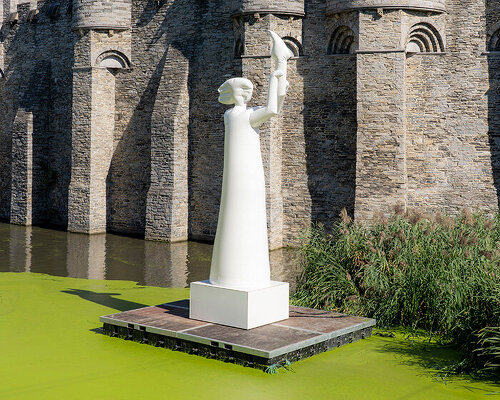
A monument that depends on its audience
In Ghent, an inflatable sculpture by zweintopf recasts the familiar language of monuments as a participatory physical task. The seven-metre work remains upright only while visitors keep pumping air into it; without that effort, its form gradually subsides into an empty shell, according to Designboom's report on the installation.
The mechanism gives the work a direct political charge. Instead of presenting democracy as a fixed and permanent civic ideal, the sculpture makes its survival visibly contingent on repeated, shared action. The audience does not simply view the monument — it becomes part of the structure that sustains it.
For architects, planners and those shaping public space, the project also questions the conventional monument's authority. Its apparent solidity is temporary, its maintenance conspicuous and its meaning inseparable from public participation. The work turns an urban object into an event whose outcome is never guaranteed.
That tension gives the Ghent installation relevance beyond its immediate setting. In cities including those in Latvia, where public art and civic spaces help frame debates about identity and belonging, the project offers a sharp reminder that monuments can invite action rather than merely demand attention.